

- aaronicks
- 2 Nov, 2026
- Smart Car
The Ultimate Buyer's Guide to Smart Cars: Connected Tech on Four Wheels
Modern automobiles are no longer just mechanical transport—they are high-performance mobile computers. From Advanced Driver Assistance Systems (ADAS) and Over-The-Air (OTA) software updates to cellular vehicle connectivity and predictive diagnostics, buying a car today requires evaluating byte rates as much as horsepower.
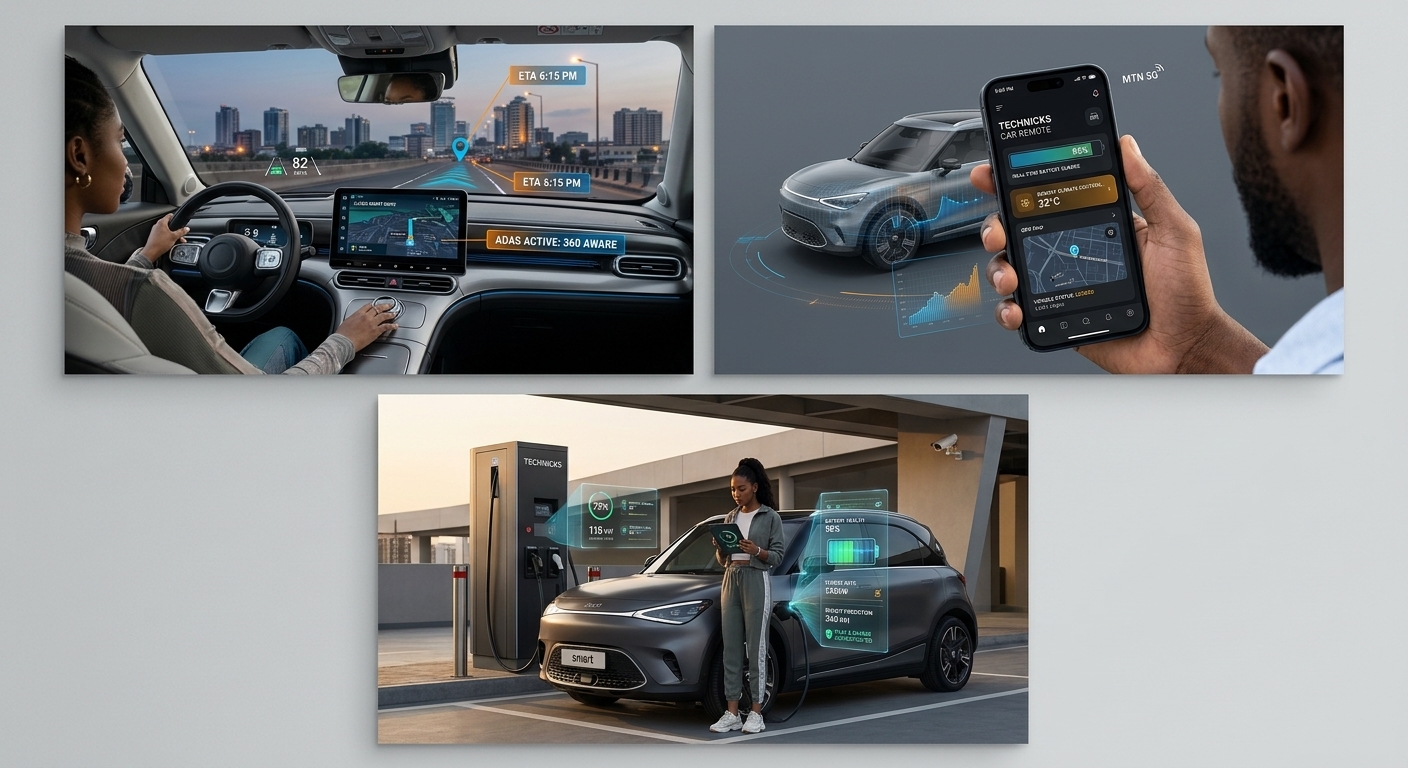
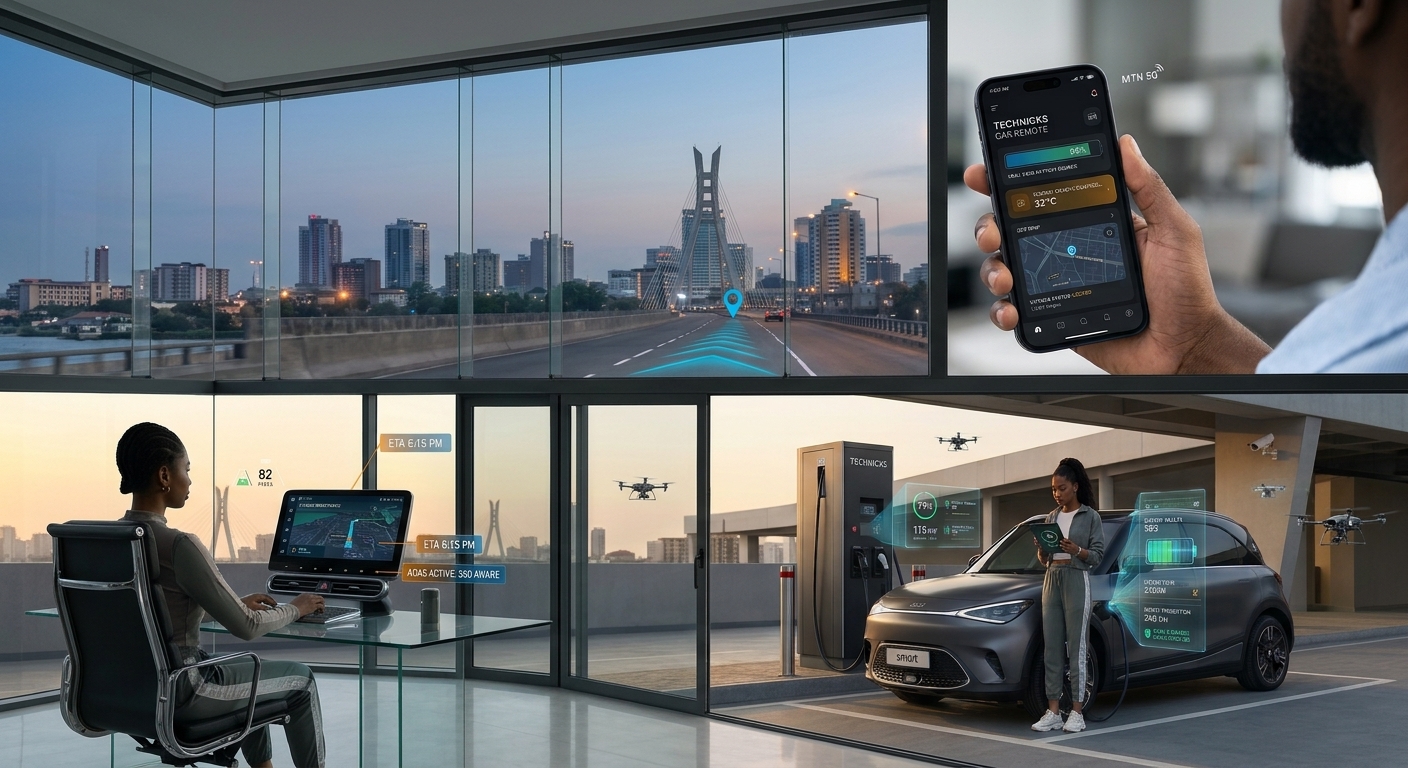
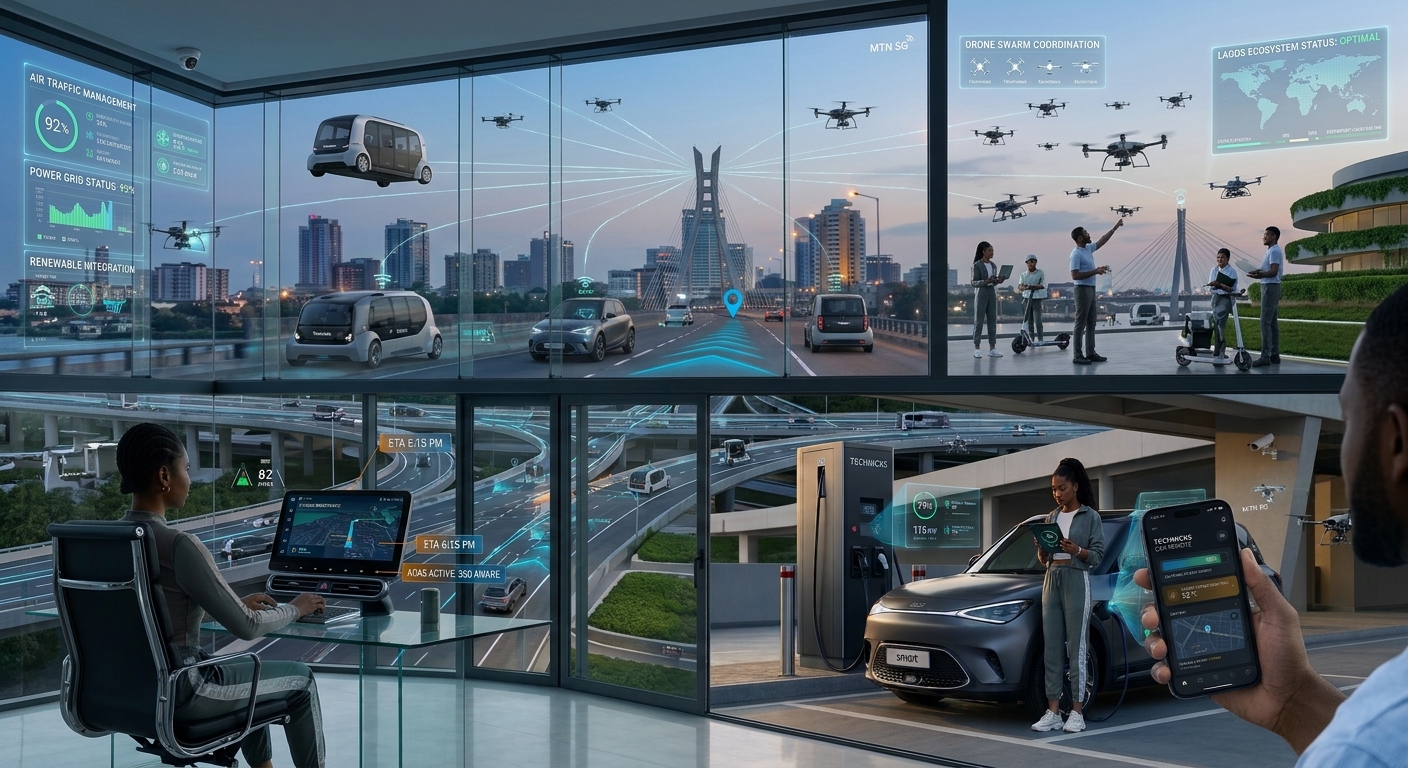
Whether you are stepping into your first connected electric vehicle (EV) or upgrading to an AI-assisted SUV, navigating the smart car market can feel overwhelming. This comprehensive buyer's guide breaks down everything you need to check before signing on the dotted line.A high-tech smart car interior in Lagos showcasing a digital cockpit, head-up display, and connected dashboard navigation.
1. Evaluate the Connectivity & Software Ecosystem
The defining characteristic of any smart vehicle is its software architecture. Just like a smartphone, a connected car relies on a responsive operating system and seamless wireless updates.
Key Features to Inspect:
- Over-The-Air (OTA) Updates: Ensure the manufacturer provides cellular OTA updates for both infotainment features and critical ECU (Engine Control Unit) firmware.
- Smartphone Integration: Verify wireless compatibility with Apple CarPlay, Android Auto, or native automotive operating systems (like Android Automotive OS).
- Telematics & Remote App Control: Test the mobile app for remote engine start, cabin climate pre-conditioning, live GPS vehicle tracking, and remote door locking.
Pro Tip: Inquire about subscription models. Many modern automakers place advanced features—such as heated seats or high-tier driver assistance—behind recurring monthly subscription paywalls.
2. Understand Autonomous Features & ADAS Levels
Not all "self-driving" features are created equal. The automotive industry classifies autonomy into SAE Levels ranging from Level 0 (no automation) to Level 5 (full vehicle autonomy).
What to Look For in Everyday Smart Cars:
- Level 2 / 2+ Autonomy: Most current smart cars offer adaptive cruise control combined with active lane-centering steering. Look for systems that feature hands-on detection and smooth stop-and-go traffic behavior.
- Safety Sensors: Check the sensor suite configuration. High-end smart vehicles combine LiDAR, radar, ultrasonic sensors, and HD cameras to maintain 360-degree awareness.
- Automated Parking Assist: Evaluates tight parallel and perpendicular parking spots and handles steering, gear shifts, and braking automatically.Driver using a connected mobile smartphone app to manage smart car telematics, battery charging, and remote start.
3. Prioritize Cybersecurity & Data Privacy
Because smart cars collect continuous data—including location logs, driving habits, camera feeds, and voice commands—data protection and vehicular cybersecurity must be top buying considerations.
Essential Security Checks:
- Encrypted Communications: Verify that cellular telemetry between the vehicle, cloud endpoints, and your mobile app uses secure TLS/SSL protocols.
- Data Opt-Out Controls: Check the vehicle’s head unit settings to confirm you can opt out of telemetry sharing with third-party data brokers or insurance monitoring agencies.
- Keyless Relaying Protection: Ensure smart key fobs utilize rolling codes or UWB (Ultra-Wideband) technology to prevent relay attacks by car thieves.
4. Smart Charging & Energy Management (EVs & Hybrids)
If you are buying a smart Electric Vehicle, energy intelligence is critical for seamless range management and low charging costs.A smart electric vehicle connected to a modern fast-charging station with digital telemetry overlays displaying real-time power metrics.
Key EV Smart Features:
- Intelligent Route Planning: Navigation systems that automatically calculate charging stops based on real-time station availability, battery temperature, and road incline.
- Plug & Charge Capability: Automatic billing authentication when plugging into compatible public fast chargers without requiring manual app scans or credit cards.
- Vehicle-to-Load (V2L) / Bi-Directional Charging: Allows your smart vehicle to power appliances or back up your home during electrical outages.
Smart Car Buyer’s Checklist
- [ ] Confirm OTA software update support lifetime.
- [ ] Test real-world smartphone app latency for remote functions.
- [ ] Inspect the ADAS safety suite (Adaptive Cruise, Blind Spot Assist, Emergency Braking).
- [ ] Review data privacy policies and telematics tracking toggles.
- [ ] Check key fob security standards (UWB / Motion-sensing sleep mode).
Connected vehicles are transforming mobility into an extension of our digital lives. Take your time during the test drive to evaluate the software user experience just as thoroughly as the mechanical ride quality!
00 Comments
No comments yet. Be the first to share your thoughts.